- Agent Pulse
- Posts
- SpaceX announced its plans to buy "Cursor" for $60 billion
SpaceX announced its plans to buy "Cursor" for $60 billion
OpenAI introduced workspace agents in ChatGPT

O P
April 22, 2026

In partnership with

700+ teams have Viktor reading their Google Ads every morning.

Your media team opens Slack at 8am. There's a cross-platform brief in #growth: Google Ads spend vs. ROAS, Meta CPA by campaign, Stripe revenue by channel. Viktor posted it at 6am. Nobody asked for it.
Last week, one team's Viktor caught a spend spike at 2am on a broad match campaign and flagged it in Slack: "CPA up 340%. Recommend pausing and shifting budget to the top two performers." That would have burned $3K by morning. The media buyer woke up to a problem already handled.
Your strategist reviews spend trends. Your account manager checks revenue attribution. Same Slack channel, same colleague, before anyone's first coffee.
Google Ads, Meta, Stripe. One message. No Looker, no Data Studio. Anomaly detection runs around the clock. Cross-platform reporting runs on autopilot.
5,700+ teams. SOC 2 certified. Your data never trains models.
"Viktor is now an integral team member, and after weeks of use we still feel we haven't uncovered the full potential." — Patrick O'Doherty, Director, Yarra Web
AIonFire | AArena | Submit Agent | Advertise | SEO Backlink
Welcome back! OP here again, helping you with another addition of Agent Pulse - your go-to spot for agentic news, insights and more.
In today’s:
👉 TOP Agentic News
✨ Featured Agents
🎙️ What to Watch this Week
⚔️ Agent Arena Battleboard
🏆 Agents Leaderboard
🗺️ Agents Landscape Map

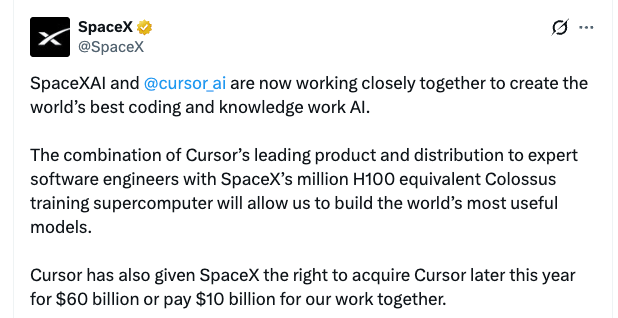
Cursor is reportedly in talks to raise $2 billion, signaling massive investor conviction in AI-native developer tools. The company has rapidly gained traction by turning coding assistants into more agentic, workflow-driven environments rather than simple autocomplete tools. Unlike traditional IDEs, Cursor positions itself as an execution layer where agents can write, refactor, and manage codebases with minimal human intervention. The scale of the raise suggests investors see developer agents as one of the most immediate and monetizable entry points into the broader agent economy. Strategically, this reinforces a key trend: coding is becoming the proving ground for fully autonomous agents before they expand into other enterprise workflows.
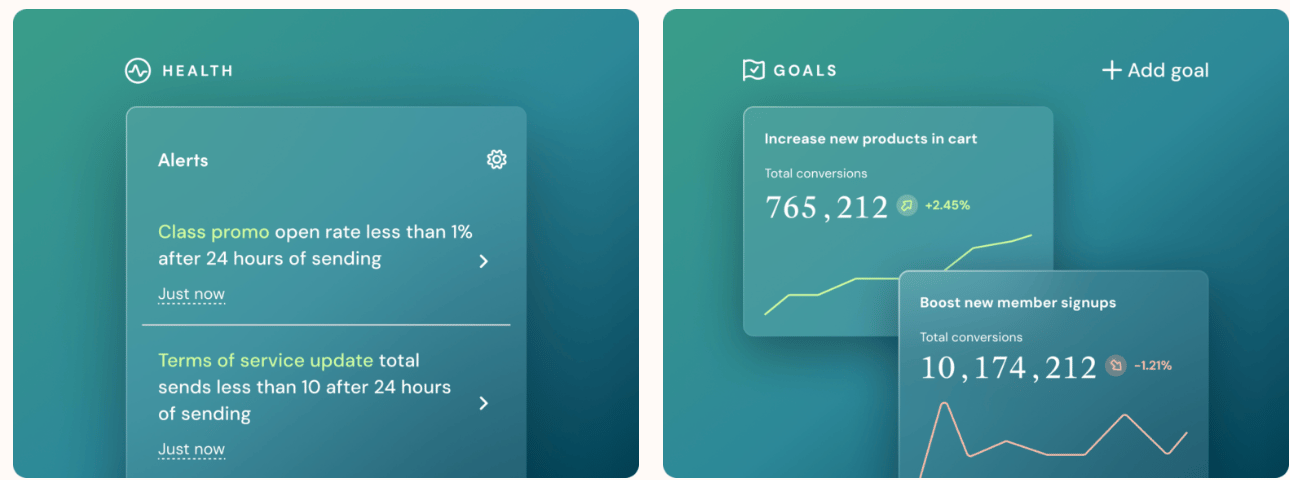
Iterable’s Spring Product Release introduced Nova Agent, a goal-driven AI agent aimed at helping marketers automate campaign timing, targeting, optimization, and orchestration. The company frames the broader release as a move to connect execution, audience activation, and governance in one workflow, with humans acting more as strategists while agents handle heavy operational work. What makes this relevant is that it pushes agentic AI into a clear commercial use case: lifecycle marketing systems where personalization often breaks under scale and operational complexity. Rather than selling AI as copy generation alone, Iterable is selling an execution layer that continuously adapts campaigns to behavior and business objectives. Strategically, this is another sign that software vendors are increasingly productizing agents not as helpers, but as persistent workflow operators inside revenue-critical systems.
Learn how to code faster with AI in 5 mins a day

You're spending 40 hours a week writing code that AI could do in 10.
While you're grinding through pull requests, 200k+ engineers at OpenAI, Google & Meta are using AI to ship faster.
How?
The Code newsletter teaches them exactly which AI tools to use and how to use them.
Here's what you get:
AI coding techniques used by top engineers at top companies in just 5 mins a day
Tools and workflows that cut your coding time in half
Tech insights that keep you 6 months ahead
Sign up and get access to the Ultimate Claude code guide to ship 5X faster.
Brev, a promising startup with strong ties to Seattle’s vibrant tech community, has successfully secured $3.3 million in pre-seed funding to advance its sophisticated AI tools designed for automatically tracking company performance against established goals. Brev’s innovative AI agents are engineered to seamlessly integrate into internal meetings, such as standups and business reviews, to autonomously update goals and proactively flag potential risks. The system also intelligently pulls relevant data from popular platforms like Slack, Jira, and Salesforce, generating comprehensive agendas and meticulously tracking follow-through on action items. This streamlined approach aims to significantly reduce manual coordination efforts, providing real-time, accurate insights directly grounded in participant discussions. Led by Resolute Ventures, this funding will facilitate Brev’s expansion of its engineering team and deepen its integrations with various essential business tools, effectively bridging the current gap between AI meeting assistants and traditional goal-tracking software.
Google Cloud also announced a $750 million fund to help partners accelerate customer adoption of agentic AI. The program is aimed at its 120,000-member partner ecosystem and will support use cases including AI value identification, prototyping, agent building, deployment, upskilling, and embedded forward-deployed engineers. Google says its ecosystem already includes more than 330,000 experts trained on implementing Google AI, which gives the funding move real distribution leverage rather than symbolic value. This matters because agent adoption in large enterprises often depends less on model access and more on whether integrators, consultancies, and channel partners can operationalize deployments inside messy real-world systems. Strategically, Google is trying to industrialize the rollout of the agentic enterprise by subsidizing the services layer that turns platform announcements into production deployments.
OpenAI introduced workspace agents in ChatGPT, positioning them as Codex-powered agents built for teams rather than solo users. The key move is that these agents can handle complex, long-running workflows, run in the cloud even when a user is away, and operate within an organization’s permissions and controls. OpenAI also made the collaboration angle explicit: workspace agents can be shared across a company, used in ChatGPT and Slack, and improved over time as reusable internal workflows. Strategically, this pushes ChatGPT further from an assistant interface toward a team-level operating layer for work, where organizations can encode process, approvals, and shared knowledge into agents. Availability is currently in research preview for ChatGPT Business, Enterprise, Edu, and Teachers plans, which makes this a meaningful enterprise product expansion rather than a demo.
What's hiding in your Google Ads account?

Most ecommerce brands that Echelonn audits have the same issues. Wasted spend hiding in campaign structure. Feed problems killing Shopping performance. Broken tracking leading to bad decisions. They’ve seen it all across 300+ accounts. Book a free audit and they’ll show you exactly where the gaps are.
Featured AI Agents
Zawa AI - AI-powered brand kit generator for logos, posters, and mockups
Agentman - AI agents for your entire medical practice back office
Vibe Otter - Build a professional website in just 30 minutes
Handinger - Turn any website into clean Markdown
Nano Banana - Prompt-based photo editing with character consistency
TheLibrarian.io - Your WhatsApp AI sidekick
Blocks - Platform that brings coding agents into your development workflow
Orloj - Declarative agent infrastructure as code for multi-agent AI orchestration

What to Watch this Week
🎙️AI on Fire: Real Builders. Real Heat.
Stories from people building AI Agents. Explore all episodes here
Building with AI Agents? Come talk about it.
AI on Fire is the podcast where we speak with founders and builders shaping the agent economy.
🏆 The Leaderboard Never Sleeps
The global ranking of AI agents is shifting every day. Who’s on top? Who just dropped?
🗺️ The Map of AI Agents (Live & Growing)
We’re charting the entire AI agent ecosystem — thousands of options across categories.
Your next agent is already on the map.


How'd we do? |
Reach 23,000+ Readers:
Newsletter is read by VCs, founders, engineers, managers and tech professionals.
Reply