- Agent Pulse
- Posts
- $543% Growth Signals Agents Are Becoming Commerce Infrastructure
$543% Growth Signals Agents Are Becoming Commerce Infrastructure
Protocols, SDKs, and execution layers converge as AI agents move from demos to real transactions

O P
March 30, 2026
In partnership with

88% resolved. 22% stayed loyal. What went wrong?

That's the AI paradox hiding in your CX stack. Tickets close. Customers leave. And most teams don't see it coming because they're measuring the wrong things.
Efficiency metrics look great on paper. Handle time down. Containment rate up. But customer loyalty? That's a different story — and it's one your current dashboards probably aren't telling you.
Gladly's 2026 Customer Expectations Report surveyed thousands of real consumers to find out exactly where AI-powered service breaks trust, and what separates the platforms that drive retention from the ones that quietly erode it.
If you're architecting the CX stack, this is the data you need to build it right. Not just fast. Not just cheap. Built to last.
AIonFire | AArena | Submit Agent | Advertise | SEO Backlink
Welcome back! OP here again, helping you with another addition of Agent Pulse - your go-to spot for agentic news, insights and more.
In today’s:
👉 TOP Agentic News
✨ Featured Agents
🎙️ What to Watch this Week
⚔️ Agent Arena Battleboard
🏆 Agents Leaderboard
🗺️ Agents Landscape Map

Google released ADK for Java 1.0.0, expanding its agent framework into a fuller multi-language stack across Python, Java, Go, and TypeScript. The release adds features that matter for production agents, including Google Maps grounding, URL fetching, code execution, centralized plugins, context compaction, memory/session services, and human-in-the-loop confirmation flows. Strategically, this is notable because Google is moving from “agents as demos” toward a more standardized developer substrate for enterprise-grade agent apps and cross-agent interoperability. For the ecosystem, it is another sign that agent frameworks are consolidating around governance, tool use, and structured execution rather than just chat wrappers.

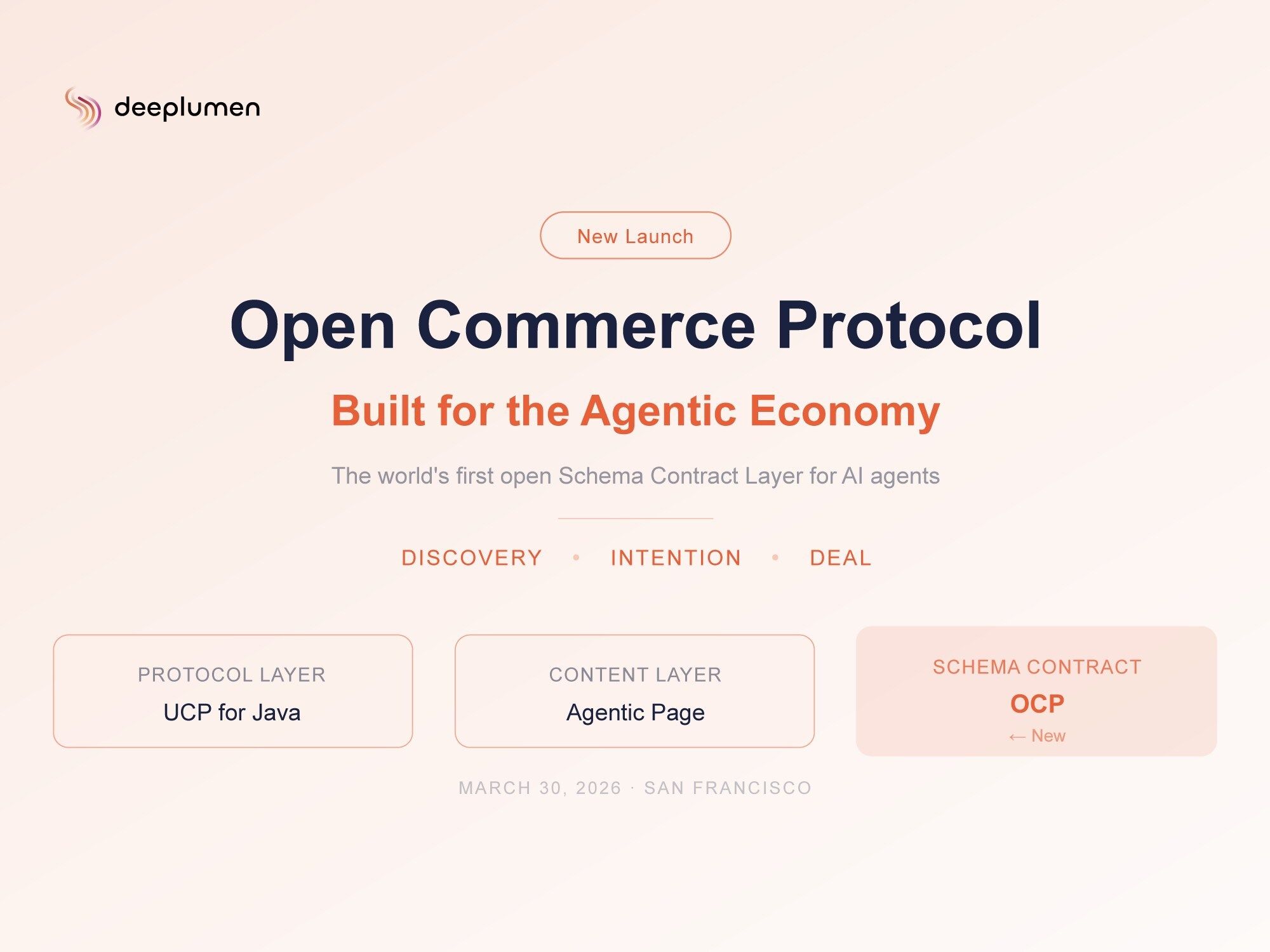
Deeplumen announced the Open Commerce Protocol (OCP), describing it as an open schema contract layer for how AI agents discover, negotiate, and execute commerce inside the OpenClaw ecosystem. The company says OCP covers the full transaction lifecycle across Discovery, Intention, and Deal, with support for approvals, settlements, returns, and disputes, and positions it as the third layer in a broader stack alongside UCP for Java and Agentic Page. The strategic importance is that more of the agentic commerce conversation is moving from concept slides into protocol design: not just how agents find products, but how they complete verifiable transactions across distributed environments. Whether OCP becomes a standard remains to be seen, but this is exactly the kind of infrastructure launch worth tracking.
Rezolve said it delivered 543% second-half growth, reported $46.8 million in 2025 revenue, exited the year at $232 million ARR with $19.4 million December MRR, and raised its 2026 revenue guidance to $360 million. The company also said it now serves 950+ enterprise customers, processed 112.7 billion API calls, and reached 59.8 million consumer devices through its SDK. Strategically, this matters because agentic commerce has lacked many public scale signals; Rezolve is trying to position itself as proof that execution infrastructure for AI-driven retail can move beyond pilots into large-volume production systems. It is still company-reported data, but the numbers are strong enough to keep on the radar.
Learn AI in 5 minutes a day

What’s the secret to staying ahead of the curve in the world of AI? Information. Luckily, you can join 2,000,000+ early adopters reading The Rundown AI — the free newsletter that makes you smarter on AI with just a 5-minute read per day.
Atlantic Health said its deployment of Artera’s AI Agents for colonoscopy outreach produced immediate measurable results in the first 30 days: 43% of contacted patients answered and confirmed identity, 39% confirmed they would attend upcoming appointments, and the AI agent reduced scheduler call time by 38%. The system is trained on an Atlantic Health-approved knowledge base, can answer 80+ clinical and operational FAQs, and supports multilingual interactions. Strategically, this is the kind of deployment the market needs more of: a narrow, high-friction workflow with measurable operational and patient-engagement gains, rather than vague claims about “transforming healthcare.” It is a strong example of agentic AI moving into structured, outcomes-driven service delivery.
3E launched a new AI platform and solution suite built around embedded AI, agentic-ready data, and standalone AI agents for product compliance. The company says its system is grounded in a proprietary regulatory knowledge base covering 500,000+ substances, 3,000+ regulatory topics, and 160+ countries, with MCP-based access for tools like Microsoft Copilot, Claude, and ChatGPT, plus a dedicated 3E Regulatory Agent. The strategic significance here is less about flashy autonomy and more about where agents may actually win first: high-value, high-complexity domains where trustworthy proprietary data, traceability, and governance matter more than open-ended reasoning. That makes this one of the more credible vertical-agent infrastructure launches of the day.
1inch announced that AI agents can now access its API suite through 1inch MCP, allowing them to plan and execute swaps, analyze portfolio data, and interact with onchain markets in real time. The company framed this as opening its infrastructure directly to agent workflows so developers can embed data access and transaction execution into autonomous systems. Strategically, this is notable because it pushes agentic commerce beyond retail discovery and into executable financial actions, where policy controls, trust, and transaction rails become central. It is another signal that MCP-style interfaces are increasingly becoming the bridge between agents and real economic systems.
The Gold Standard for AI News
AI will eliminate 300 million jobs in the next 5 years.
Yours doesn't have to be one of them.
Here's how to future-proof your career:
Join the Superhuman AI newsletter - read by 1M+ professionals
Learn AI skills in 3 mins a day
Become the AI expert on your team
Featured AI Agents
Orloj - Declarative agent infrastructure as code for multi-agent AI orchestration
Handinger - Turn any website into clean Markdown
Agentman - AI agents for your entire medical practice back office
Dzine AI - All-in-one AI image and video generator
Vibe Otter - Build a professional website in just 30 minutes
Nano Banana - Prompt-based photo editing with character consistency
TheLibrarian.io - Your WhatsApp AI sidekick
Blocks - Platform that brings coding agents into your development workflow
What to Watch this Week
🎙️AI on Fire: Real Builders. Real Heat.
Stories from people building AI Agents. Explore all episodes here
Building with AI Agents? Come talk about it.
AI on Fire is the podcast where we speak with founders and builders shaping the agent economy.
🏆 The Leaderboard Never Sleeps
The global ranking of AI agents is shifting every day. Who’s on top? Who just dropped?
🗺️ The Map of AI Agents (Live & Growing)
We’re charting the entire AI agent ecosystem — thousands of options across categories.
Your next agent is already on the map.


How'd we do? |
Reach 23,000+ Readers:
Newsletter is read by VCs, founders, engineers, managers and tech professionals.
Reply