- Agent Pulse
- Posts
- 1M Context to Replace Chat With Execution Engines
1M Context to Replace Chat With Execution Engines
Models, Media, and Memory: The Stack Behind Autonomous Agents

O P
April 03, 2026
In partnership with

The fastest-growing repo on GitHub is a one person team!
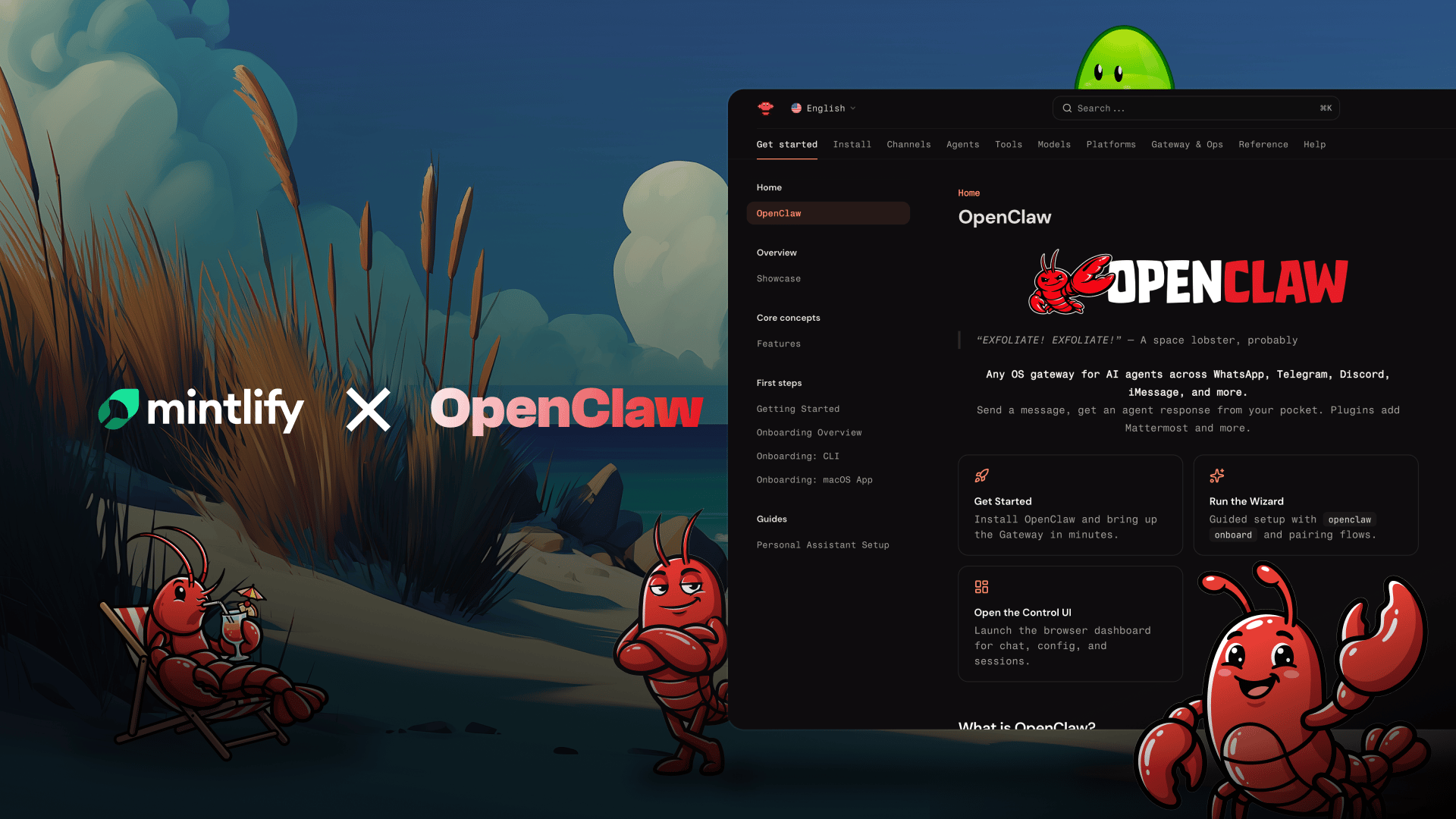
OpenClaw went from 9K to 185K GitHub stars in 60 days — the fastest-growing repo in history.
Their docs? One person, plus Claude. They scaled to the top 1% of all Mintlify sites, shipping 24 documentation updates a day.
AIonFire | AArena | Submit Agent | Advertise | SEO Backlink
Welcome back! OP here again, helping you with another addition of Agent Pulse - your go-to spot for agentic news, insights and more.
In today’s:
👉 TOP Agentic News
✨ Featured Agents
🎙️ What to Watch this Week
⚔️ Agent Arena Battleboard
🏆 Agents Leaderboard
🗺️ Agents Landscape Map


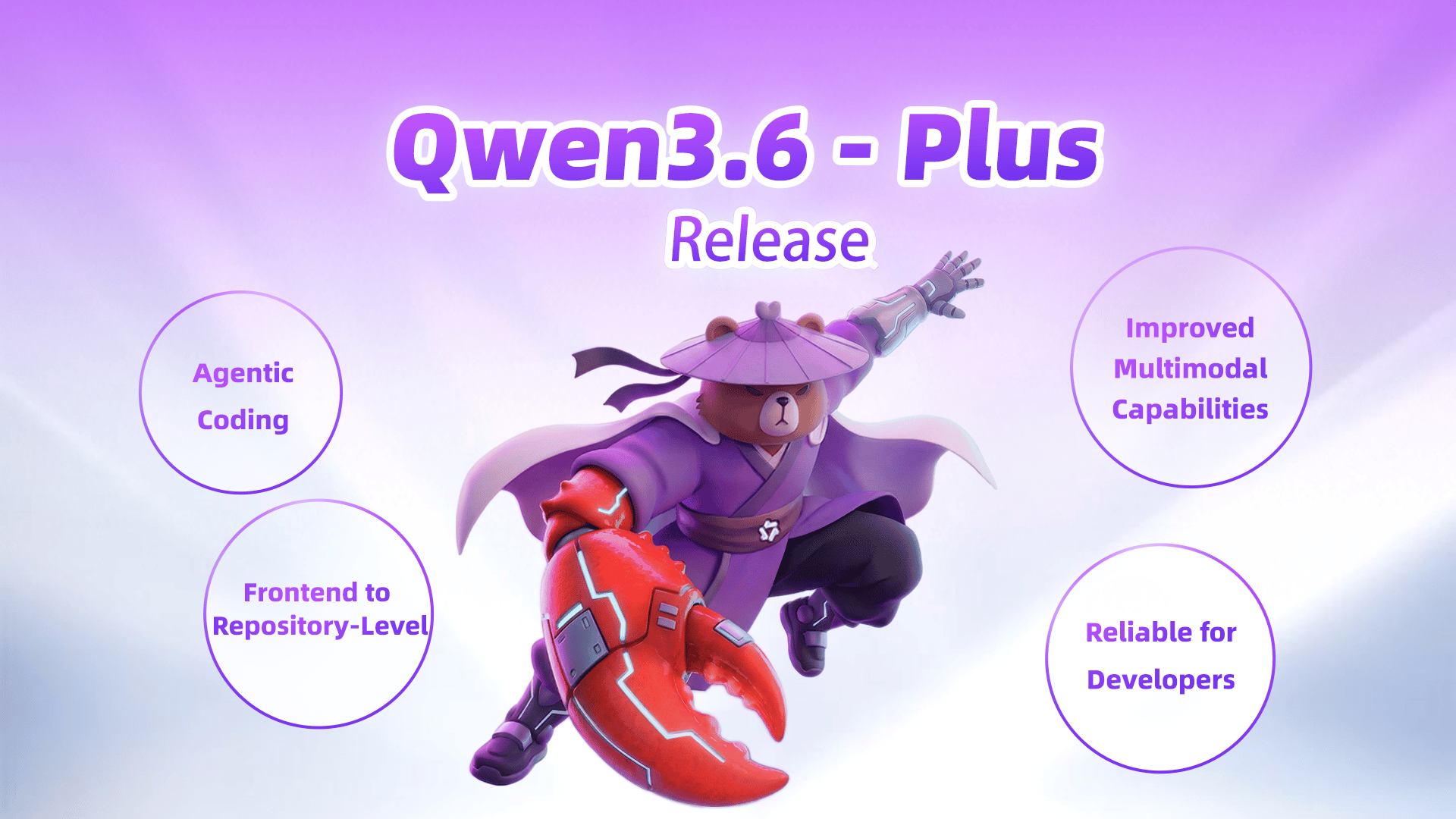
Alibaba launched Qwen3.6-Plus, positioning it explicitly as a model built for real-world agent execution rather than chat. The release introduces a 1M token context window, major upgrades in agentic coding, and stronger multimodal reasoning, with benchmarks showing gains across tool use, long-horizon planning, and repository-level tasks.
What stands out is the integration of reasoning + memory + execution into a single system — effectively turning the model into a more complete “agent core” rather than a text generator. Alibaba is clearly targeting workflows like autonomous coding, terminal operations, and multi-step task execution, not just prompts.
Strategically, Qwen3.6-Plus reinforces a broader shift: models are no longer competing just on intelligence, but on their ability to operate as reliable agents in production environments. This is another step toward models becoming execution engines, not interfaces.

OpenAI acquired TBPN (Technology Business Programming Network), a fast-growing tech talk show known for its daily live broadcasts and access to top industry leaders. The company says the goal is to “accelerate the global conversation around AI”, while keeping TBPN editorially independent.
TBPN has become a key media node in Silicon Valley, hosting executives across OpenAI, Meta, Microsoft, and beyond, with a format often described as “SportsCenter for tech.”
This move is less about media revenue and more about distribution and influence. As AI becomes infrastructure, the battle is shifting to who controls attention, narrative, and developer mindshare. OpenAI isn’t just building models — it’s now investing directly in the channels where builders and decision-makers form opinions.
The bigger signal: in the agent era, owning the interface layer (models) is not enough — companies are starting to compete for the conversation layer as well.
The Hustle: Claude Hacks For Marketers

Some people use Claude to write emails. Others use it to basically run their entire business while they play Wordle.
This isn't just ChatGPT's cooler cousin. It's the AI that's quietly revolutionizing how smart people work – writing entire business plans, planning marketing campaigns, and basically becoming the intern you never have to pay.
The Hustle's new guide shows you exactly how the AI-literate are leaving everyone else behind. Subscribe for instant access.
OpenAI introduced GPT-5.4, positioning it as a step toward more consistent, production-ready agent behavior rather than just incremental model intelligence. The update focuses on stronger multi-step reasoning, tool use, and reliability under long-running tasks — areas where earlier models often degraded in real-world agent workflows.
A key improvement is how GPT-5.4 handles extended context and task persistence, enabling agents to maintain coherence across longer sessions and more complex chains of actions. OpenAI is also emphasizing better cost-performance tradeoffs, suggesting the model is tuned not just for capability, but for sustained use inside agent systems that operate continuously.
Strategically, GPT-5.4 reflects a clear shift: frontier models are no longer optimized for chat or benchmarks alone, but for being dependable execution layers inside agents. The direction is consistent across the ecosystem — models are becoming less like assistants and more like runtime engines for autonomous systems.
Reuters reported that China’s cyberspace regulator released draft rules for digital humans, requiring clear labeling and restricting uses that could mislead minors or bypass identity checks. The proposal would also ban using someone’s personal data to create digital humans without consent and places broader content and safety obligations on providers. While this is framed around virtual humans, it matters to the agent economy because it shows regulators starting to define how autonomous or semi-autonomous AI personas can appear, represent identity, and interact with users online. In practical terms, the policy direction points toward a future where agent deployment increasingly depends on provenance, labeling, consent, and behavioral guardrails.
Arcee’s Trinity-Large-Thinking release as a notable open-model move for enterprise AI, and Arcee’s own release frames it explicitly as an open reasoning model for complex, long-horizon agents and multi-turn tool calling. Arcee says Trinity-Large-Thinking is available via API and as open weights under Apache 2.0, while VentureBeat describes it as a 399B-parameter text-only reasoning model positioned for enterprise customization. The strategic importance is less about one benchmark race and more about the market split it reinforces: frontier closed models are pushing top-end capability, while open models are increasingly becoming the substrate for controllable, auditable agent deployments. That is especially relevant for enterprises that want ownership, customization, and lower lock-in for production agents.

Turn AI into Your Income Engine
Ready to transform artificial intelligence from a buzzword into your personal revenue generator
HubSpot’s groundbreaking guide "200+ AI-Powered Income Ideas" is your gateway to financial innovation in the digital age.
Inside you'll discover:
A curated collection of 200+ profitable opportunities spanning content creation, e-commerce, gaming, and emerging digital markets—each vetted for real-world potential
Step-by-step implementation guides designed for beginners, making AI accessible regardless of your technical background
Cutting-edge strategies aligned with current market trends, ensuring your ventures stay ahead of the curve
Download your guide today and unlock a future where artificial intelligence powers your success. Your next income stream is waiting.
Featured AI Agents
DramaPixel - Unified AI workspace for generating images, videos, and music
Atomic Mail - Secure private email with end-to-end encryption and zero-access storage
Orloj - Declarative agent infrastructure as code for multi-agent AI orchestration
Handinger - Turn any website into clean Markdown
Agentman - AI agents for your entire medical practice back office
Dzine AI - All-in-one AI image and video generator
Vibe Otter - Build a professional website in just 30 minutes
Nano Banana - Prompt-based photo editing with character consistency
TheLibrarian.io - Your WhatsApp AI sidekick
Blocks - Platform that brings coding agents into your development workflow
What to Watch this Week
🎙️AI on Fire: Real Builders. Real Heat.
Stories from people building AI Agents. Explore all episodes here
Building with AI Agents? Come talk about it.
AI on Fire is the podcast where we speak with founders and builders shaping the agent economy.
🏆 The Leaderboard Never Sleeps
The global ranking of AI agents is shifting every day. Who’s on top? Who just dropped?
🗺️ The Map of AI Agents (Live & Growing)
We’re charting the entire AI agent ecosystem — thousands of options across categories.
Your next agent is already on the map.


How'd we do? |
Reach 23,000+ Readers:
Newsletter is read by VCs, founders, engineers, managers and tech professionals.
Reply